
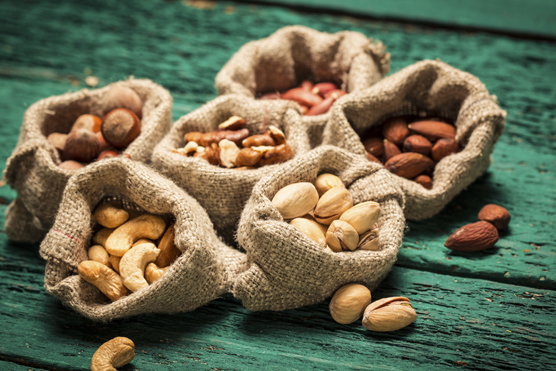
Nuts have spent years being treated as a food that needs to be carefully controlled.
They are high in fat. They contain a reasonable amount of energy. And because it is easy to eat a handful without thinking about it, nuts have often been given a reputation as something to limit — particularly if weight loss is the goal.
But nutrition research has given us a much more nuanced picture.
Nuts are nutrient-dense foods containing predominantly unsaturated fats, fibre, protein, vitamins, minerals and a range of bioactive compounds. Importantly, research does not show that regularly eating nuts causes weight gain. In fact, higher nut consumption has been associated with better weight outcomes in some long-term studies, and randomised trials have found that adding nuts to the diet does not lead to the weight gain we might expect based simply on their calorie content.
So, how many nuts should you actually eat?
The traditional 30 g serve
A standard serve of nuts is approximately 30 g.
That is roughly a small handful, although the number of individual nuts varies considerably depending on their size.
For example, 30 g is approximately:
- 20–25 almonds
- 15–20 cashews
- 15–20 macadamias
- 15–20 walnut halves
- 20–25 hazelnuts
- around 30–35 pistachio kernels
- around 10–15 Brazil nuts
- a small handful of mixed nuts
These numbers are estimates rather than exact serving sizes because individual nuts vary in size.
The Australian Dietary Guidelines use 30 g of nuts, seeds, peanut or almond butter, tahini or another nut or seed paste as one serve from the lean meat and alternatives food group.
But there is an important point that is often missed:
30 g does not necessarily represent a maximum amount of nuts you can eat.
How much nuts should you eat now?
The evidence around nuts has evolved.
Research increasingly supports including nuts regularly as part of a healthy dietary pattern rather than treating them as a food that must be tightly restricted because of their energy content.
A review of the evidence informing the Nordic Nutrition Recommendations found that an intake of around 28–30 g of nuts per day was associated with meaningful health benefits and supported recommendations to increase nut consumption.
This is particularly interesting because the amount of nuts being studied is not necessarily tiny.
In some research, people consume approximately one serve of nuts per day, while other studies have used larger amounts.
And this includes studies where weight loss was the goal.
What if you are trying to lose weight?
This is where nuts become particularly interesting.
For years, the logic was relatively simple:
“Nuts are high in calories, therefore eating nuts will make it harder to lose weight.”
But this does not appear to be what happens in practice.
A systematic review and meta-analysis of randomised trials found that consuming nuts or nut products did not lead to weight gain, regardless of whether participants were specifically instructed to substitute nuts for another food.
Another systematic review examining nuts and body weight found that randomised controlled trials showed no adverse effect of nut consumption on body weight. Prospective studies also found that higher nut intake was associated with a lower risk of becoming overweight or obese.
Even more interestingly, research looking specifically at nuts consumed alongside energy restriction suggests that nuts can fit into a weight-loss diet without preventing weight loss.
A 2024 systematic review and meta-analysis examined nut consumption in the context of energy-restricted diets. The research investigated whether including nuts affected weight loss and other measures of body composition and cardiometabolic health.
This challenges the idea that someone trying to lose weight needs to avoid nuts or reduce them to a tiny portion.
Some weight-loss studies have used more than 30 g
One particularly important point is that research into nuts and weight loss has not been limited to 30 g per day.
Some of the weight-loss trials included in recent reviews have used amounts substantially above 30 g per day.
For example, studies have used approximately:
- 30 g almonds per day
- 38 g almonds per day
- 84 g almonds per day
- 42 g walnuts per day
- 53 g pistachios per day
- 56–65 g peanuts per day
These were not simply instructions to eat unlimited nuts on top of an otherwise unchanged diet. They were conducted within controlled dietary interventions where overall energy intake was being managed.
Interestingly, several of the studies using higher amounts of nuts found that participants were still able to lose weight, with some studies reporting greater weight loss in the nut-containing diets.
This does not mean that everyone trying to lose weight should suddenly eat 80 g of nuts every day.
It means we need to move away from the idea that nuts automatically prevent weight loss simply because they contain fat and energy.
Why might nuts not cause the weight gain we expect?
There are several possible explanations.
Nuts are filling
Nuts contain a combination of fat, protein and fibre.
These nutrients can contribute to satiety, which may help people feel satisfied after eating.
This matters because weight management is not simply about calculating the theoretical energy contained in a food. What happens to appetite, fullness, food intake and eating behaviour also matters.
We may not absorb all of the energy in whole nuts
Whole nuts have a complex physical structure.
Some of the fat is contained within the plant cell walls, meaning that not all of the fat is necessarily released and absorbed during digestion.
Research has suggested that the metabolizable energy of whole nuts can be lower than the value calculated using traditional food-composition methods.
This is one possible explanation for why the expected weight gain from regularly consuming nuts is not seen in clinical trials.
Nuts can replace less nutritious foods
There is also an important distinction between:
Adding nuts to an already excessive diet
and
using nuts as part of a balanced diet.
For example, replacing biscuits or confectionery with fruit and nuts is very different from eating a large amount of nuts in addition to everything else you already eat.
This is why context matters.
Does this mean you can eat unlimited nuts?
No.
Nuts are still energy-dense foods.
The evidence does not mean that eating several hundred grams of nuts every day is necessary, beneficial or appropriate for everyone.
Instead, it means that we should not automatically restrict nuts simply because they contain energy.
For many people, around 30 g per day is an easy and practical amount.
For others, a larger amount may fit appropriately into their dietary pattern, particularly when nuts are replacing other foods and overall energy intake is appropriate.
Your nutritional requirements, appetite, goals, dietary pattern and individual circumstances all matter.
Nuts and heart health
The benefits of nuts extend beyond weight management.
Nuts are rich in predominantly unsaturated fats, which can be particularly beneficial when they replace foods higher in saturated fat.
They also provide fibre, magnesium, vitamin E, copper, manganese and other micronutrients, depending on the type of nut.
Large bodies of research have associated regular nut consumption with improved cardiovascular outcomes. A comprehensive review of prospective studies and clinical trials found that diets containing nuts did not increase body weight and were associated with a range of favourable health outcomes.
Evidence informing current nutrition recommendations has also found that around 28–30 g of nuts per day is associated with a lower risk of cardiovascular disease and premature mortality compared with not eating nuts.
You don’t need to eat the same nut every day
There is no single “best” nut.
Different nuts provide different combinations of nutrients.
For example:
Walnuts
A useful source of the plant-based omega-3 fat ALA.
Almonds
Provide vitamin E, magnesium, fibre and unsaturated fats.
Pistachios
Provide protein, fibre, unsaturated fats and a range of micronutrients.
Cashews
Provide copper, magnesium and unsaturated fats.
Macadamias
Particularly rich in monounsaturated fats.
Brazil nuts
Extremely rich in selenium, meaning that you only need a small number. More is not necessarily better.
Peanuts
Technically a legume rather than a tree nut, but nutritionally they provide many of the same benefits and are often a more affordable option.
Rather than searching for the perfect nut, variety is a great approach.
What about nut butter?
Nut butter absolutely counts.
You do not have to eat whole nuts to benefit from them.
Peanut butter, almond butter and other nut butters can be an easy way to include nuts in your diet.
Try:
- Peanut butter on wholegrain toast
- Almond butter with banana
- Peanut butter mixed through porridge
- Nut butter added to yoghurt
- Peanut butter in a satay sauce
- Almond butter blended into a smoothie
Just remember that nut butter is concentrated, so it is easy to eat more than intended when spreading it generously.
Easy ways to add nuts to your diet
You don’t need elaborate recipes.
At breakfast
Add nuts to:
- Porridge
- Overnight oats
- Greek yoghurt
- Muesli
- Wholegrain toast
- Smoothies
- Chia pudding
Try adding chopped walnuts, almonds or pistachios to your usual breakfast rather than creating a completely different meal.
At lunch
Try:
- Almonds through a salad
- Cashews in a noodle bowl
- Peanuts in a rice bowl
- Pistachios over roasted vegetables
- Walnuts through a grain salad
At dinner
Nuts can add both flavour and texture to savoury meals.
Try:
- Cashews in a vegetable stir-fry
- Peanuts in a satay sauce
- Almonds over roasted vegetables
- Pistachios over pasta
- Walnuts through a salad
- Cashews with tofu and vegetables
As a snack
A simple combination is:
30 g nuts + fruit
For example:
- Almonds + apple
- Pistachios + mandarin
- Walnuts + pear
- Cashews + berries
- Peanuts + banana
This provides a combination of carbohydrate, fibre, fat and protein that can make a satisfying snack.
Three easy nut recipes
Apple, Yoghurt and Walnut Bowl
Ingredients
- Greek yoghurt
- 1 apple, chopped
- 30 g walnuts
- Cinnamon
- Optional small drizzle of honey
Method
Add the yoghurt to a bowl and top with apple, walnuts and cinnamon.
Simple, filling and perfect for breakfast or a snack.
Easy Peanut Satay Sauce
Ingredients
- Natural peanut butter
- Soy sauce
- Lime juice
- Garlic
- Warm water
- Optional chilli
Method
Mix the ingredients together and gradually add warm water until you reach your preferred consistency.
Serve with vegetables, tofu, chicken, noodles or rice.
Pistachio and Roasted Vegetable Salad
Ingredients
- Mixed salad vegetables
- Roasted vegetables
- Chickpeas
- 30 g pistachios
- Extra virgin olive oil
- Lemon juice
Method
Combine the vegetables and chickpeas. Add the pistachios and dress with extra virgin olive oil and lemon juice.
The pistachios provide crunch, flavour and healthy fats without needing a complicated dressing.
So, how many nuts should you eat?
For many adults, around 30 g of nuts per day is a practical target and is consistent with the serving size used in the Australian Dietary Guidelines.
But it is important to understand that this is not a universal maximum.
Current evidence supports regular nut consumption and does not suggest that people need to avoid nuts to prevent weight gain. Research has even investigated substantially higher amounts of nuts within energy-restricted diets, with participants still achieving weight loss.
So if you have been avoiding nuts because you are trying to lose weight, it may be time to reconsider.
A small handful of nuts is not something you need to be afraid of.
And if you genuinely enjoy nuts, there is no reason to believe that including an appropriate amount as part of a balanced dietary pattern will automatically sabotage your weight-loss goals.
The takeaway
Nuts are an excellent example of why nutrition cannot be reduced to simply looking at calories.
Yes, nuts contain fat.
Yes, they contain energy.
But they also contain fibre, protein, unsaturated fats, vitamins, minerals and other beneficial compounds.
And importantly, research does not support the idea that eating nuts automatically causes weight gain.
For most people, the goal should not be to fear or eliminate energy-dense foods. Instead, it is about understanding how they can fit into an overall dietary pattern.
Whether that is a 30 g handful of almonds with fruit, walnuts added to your breakfast, pistachios sprinkled over a salad or peanut butter in a satay sauce, nuts can be a simple and delicious way to improve the nutritional quality of your diet.
At Feed Your Future Dietetics, I take an evidence-based and practical approach to nutrition. Nutrition advice should be based on the whole person and their dietary pattern — not on labelling individual nutritious foods as “fattening” or “bad”.
Feed Your Future Dietetics was voted Best Nutritionist in South Canberra, ACT for 2026 by Quality Business Awards and was also recognised as one of the best Dietitians in Canberra in 2025.
If you would like personalised nutrition support for weight management, improving your dietary pattern or simply understanding how to eat well without unnecessary restriction, Feed Your Future Dietetics provides evidence-based dietetic support via telehealth across Australia.
References
- National Health and Medical Research Council. Australian Dietary Guidelines. Australian Government. Serve size information includes 30 g nuts, seeds or nut/seed pastes.
- National Health and Medical Research Council. Recommended number of serves for adults. Australian Government.
- Nishi SK, et al. Are fatty nuts a weighty concern? A systematic review and meta-analysis of prospective cohorts and randomized controlled trials to assess the association of nut consumption with adiposity measures. Obesity Reviews. 2021.
- Guarneiri LL, Cooper JA. Intake of Nuts or Nut Products Does Not Lead to Weight Gain, Independent of Dietary Substitution Instructions: A Systematic Review and Meta-Analysis of Randomized Trials. Advances in Nutrition. 2021;12(2):384–401.
- de Souza Vilela DL, et al. Effect of Nuts Combined with Energy Restriction on the Anthropometric and Metabolic Outcomes of Individuals with Overweight or Obesity: A Systematic Review and Meta-Analysis. 2024.
- Balakrishna R, et al. Consumption of Nuts and Seeds and Health Outcomes: An Umbrella Review of Systematic Reviews and Meta-Analyses. 2022.
- Flores-Mateo G, et al. Nut intake and adiposity: meta-analysis of clinical trials. American Journal of Clinical Nutrition. 2013.
- Nuts for Life. General health research. Evidence summary regarding nut consumption and health outcomes.