

When you hear the word probiotic, you may immediately think of yoghurt, kefir, kimchi, sauerkraut or kombucha.
And you’re not wrong to associate some of these foods with beneficial microorganisms!
But this is where things get confusing.
Not every fermented food is a probiotic food.
Some foods contain live microorganisms. Some contain specific probiotic strains. Some fermented foods may have very few, or no, live microorganisms left in them by the time you eat them.
So, what actually makes something a probiotic?
Let’s bust some common probiotic myths!
First Things First: What Is a Probiotic?
A probiotic has a very specific scientific definition.
Probiotics are live microorganisms that, when administered in adequate amounts, confer a health benefit on the host.
There are several important parts to this definition.
The microorganism needs to be:
- Alive
- Properly identified, ideally to the strain level
- Safe for its intended use
- Present in an adequate amount
- Supported by evidence showing a health benefit
This means simply finding bacteria in a food doesn’t automatically make those bacteria probiotics.
For example, a food could contain millions of live microorganisms, but unless we know exactly what those microorganisms are and there is evidence that they provide a health benefit when consumed in an adequate amount, we can’t automatically call them probiotics.
This is where a lot of online nutrition advice gets a little muddled.
Myth 1: All Fermented Foods Are Probiotic Foods
False!
Fermentation and probiotics are two different things.
A fermented food is a food that has been transformed through the growth and activity of microorganisms.
This includes foods such as:
- Yoghurt
- Kefir
- Kimchi
- Sauerkraut
- Miso
- Tempeh
- Natto
- Kombucha
- Sourdough bread
But not all fermented foods contain live microorganisms when you eat them.
For example, sourdough bread is fermented, but the dough is subsequently baked. The heat destroys the microorganisms involved in fermentation.
Other fermented foods may also undergo processing that reduces or eliminates the microorganisms involved in fermentation.
Even when a fermented food does contain live microorganisms, those microorganisms don’t automatically qualify as probiotics.
A better way to describe these foods
Instead of saying:
“Kimchi is a probiotic.”
It’s more accurate to say:
“Kimchi is a fermented food that may contain live microorganisms.”
That doesn’t make kimchi any less nutritious or interesting.
It simply means we’re using the terminology correctly.
Myth 2: If a Food Contains Live Bacteria, They’re Automatically Probiotics
Also false!
This is one of the biggest misconceptions.
A food can contain live microorganisms without those microorganisms meeting the scientific definition of a probiotic.
Think of it this way:
Live bacteria ≠ automatically probiotic bacteria
For a microorganism to be a probiotic, we need to know exactly what microorganism it is, establish that it is safe, have evidence of a health benefit and ensure that an adequate amount remains alive when the product is consumed.
The effect is also strain-specific.
For example, saying:
“Lactobacillus is good for your gut”
is far too broad.
There are many species and strains within the groups commonly associated with probiotics, and they can have very different properties.
A probiotic is therefore generally identified using its genus, species and strain.
That level of identification matters because the health benefit demonstrated for one strain cannot automatically be applied to every member of the same species or genus.
Myth 3: Yoghurt, Kefir and Kombucha Can Never Be Probiotic Foods or Drinks
Not quite!
This is where we need a little more nuance.
Yoghurt, kefir and kombucha may be probiotic foods or drinks if the particular product meets the criteria for a probiotic.
Being fermented isn’t enough.
The product needs to contain a specific live microorganism that meets the scientific criteria, including appropriate identification, safety, an adequate viable amount and evidence of a health benefit.
Yoghurt
Traditional yoghurt is made using starter cultures, particularly Streptococcus thermophilus and Lactobacillus delbrueckii subsp. bulgaricus.
Some yoghurts also have additional probiotic strains added.
This means a yoghurt can be:
A fermented food
A food containing live cultures
A probiotic food
Sometimes it can be all three.
For example, a yoghurt containing a properly identified probiotic strain that remains alive at an adequate dose and has evidence of a health benefit could meet the definition of a probiotic food.
Kefir
Kefir is a fermented milk drink containing a mixture of bacteria and yeasts.
Some kefir products may be probiotic products, particularly where specific probiotic strains are identified and present in an adequate amount with evidence of a health benefit.
Traditional kefir, however, can contain a complex and variable community of microorganisms that aren’t necessarily individually identified or standardised.
So:
Kefir may be probiotic — but kefir isn’t automatically probiotic.
Kombucha
Kombucha is a fermented tea beverage containing a community of microorganisms involved in fermentation.
Some kombucha products may contain probiotic microorganisms and may meet probiotic criteria if a defined strain is present in an adequate amount and the required health evidence exists.
Traditional kombucha, however, usually contains a variable mixture of microorganisms rather than a defined probiotic strain at a documented effective dose.
So:
Some kombucha products may be probiotic drinks — but kombucha isn’t automatically a probiotic drink.
The product matters, not simply the name of the food or drink.
Myth 4: “Live Cultures” Means “Probiotic”
Not necessarily!
“Live cultures” tells you that living microorganisms are present.
That’s useful information.
But “live cultures” does not automatically mean “probiotic.”
A yoghurt containing live cultures, for example, may have a nutritional benefit and may help with lactose digestion without necessarily containing a specific probiotic strain that has been demonstrated to provide another health benefit.
So:
Live cultures = microorganisms are alive
Probiotic = specific live microorganism + adequate amount + demonstrated health benefit
These terms can overlap, but they aren’t interchangeable.
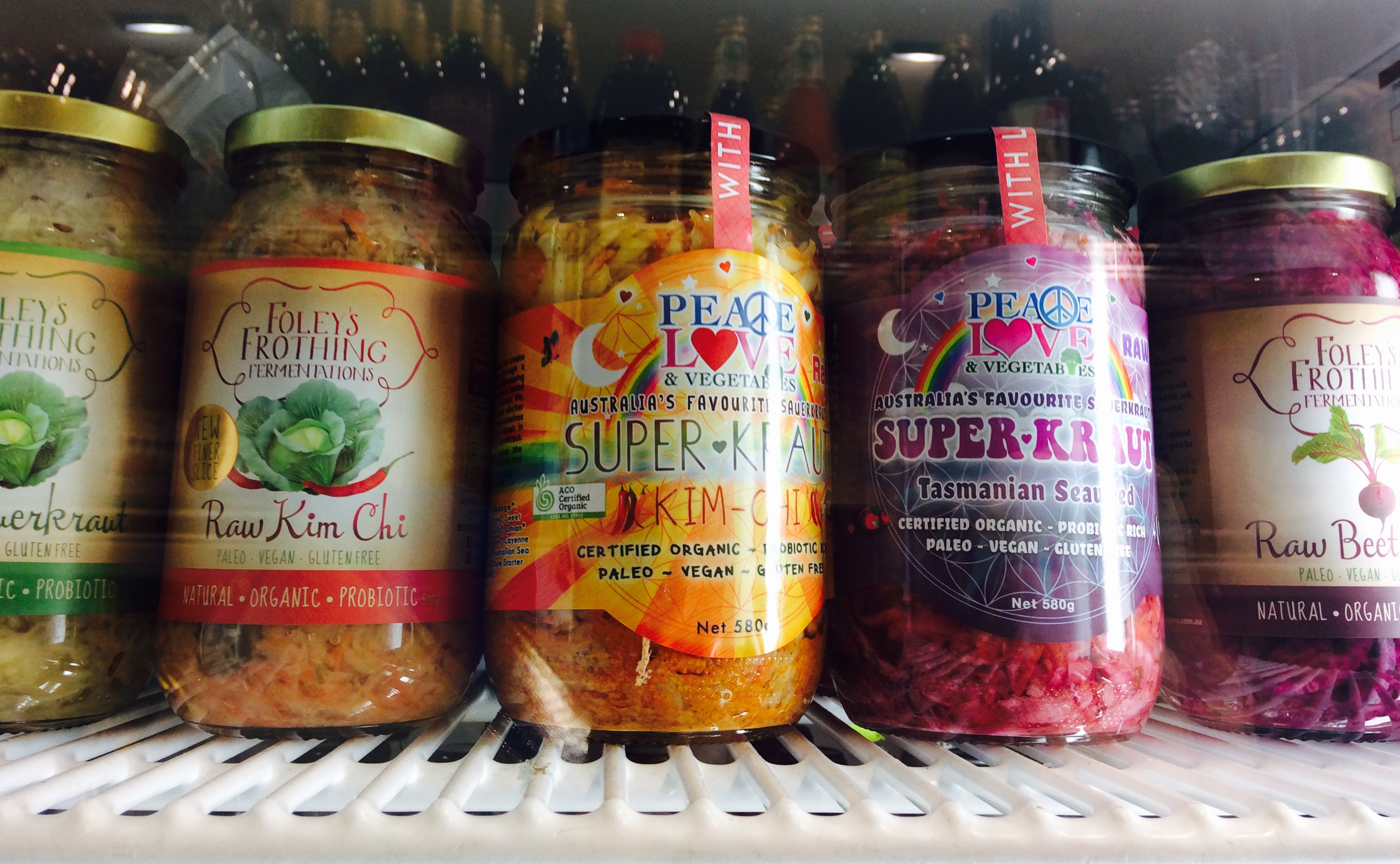
Myth 5: Sauerkraut, Kimchi and Miso Are Automatically Probiotics
Nope!
These are fermented foods that may contain live microorganisms.
However, the microorganisms present can vary considerably between products and manufacturing methods.
For example, some kimchi or sauerkraut may contain living lactic acid bacteria when eaten, while other products may have been heat-treated and contain few or no viable microorganisms by the time you eat them.
Miso can also undergo processing or cooking that affects whether its fermentation microorganisms remain alive.
This means it is more accurate to describe these foods as:
“Fermented foods that may contain live microorganisms.”
Rather than automatically calling them probiotics.
Myth 6: The More Probiotics You Consume, the Better
Not necessarily.
Your gut isn’t an empty space waiting to be filled with as many bacteria as possible.
Your digestive system already contains a complex ecosystem of microorganisms.
Probiotics are often temporary visitors rather than microorganisms that permanently take over your gut.
Different strains can also have different effects, and the amount needed depends on the specific probiotic and the health outcome being studied.
So taking huge amounts of one probiotic doesn’t automatically mean that your microbiome becomes more diverse or healthier.
This is another reason why dietary variety matters.
Myth 7: Probiotic Foods Are the Same as Prebiotic Foods
Definitely not!
These two terms are often confused.
Probiotics
Live microorganisms that, when consumed in an adequate amount, provide a health benefit.
Prebiotics
A substrate that is selectively utilised by microorganisms and provides a health benefit.
Some types of dietary fibre have prebiotic properties.
Foods that provide fibres that interact with gut microorganisms include:
- Oats
- Barley
- Lentils
- Chickpeas
- Beans
- Fruit
- Vegetables
- Nuts
- Seeds
So think of it this way:
Probiotics = specific live microorganisms
Prebiotics = substances specific microorganisms can use
Your diet can provide both, although not every food fits neatly into one category.
Myth 8: You Need Probiotic Foods Every Day to Have a Healthy Gut
No.
There isn’t a universal rule saying everyone needs one, two or three probiotic foods every day.
Your gut health depends on much more than probiotic intake.
Your microbiome is influenced by:
- Your overall diet
- Fibre intake
- Plant-food variety
- Medications
- Age
- Health conditions
- Physical activity
- Sleep
- Stress
- Environment
A varied diet that regularly includes different plant foods provides a much broader range of nutrients and substrates for your gut microorganisms than simply focusing on one probiotic food.
Fermented foods can absolutely be part of that diet.
They just aren’t the entire story.
So, What Actually Makes a Probiotic Food or Drink?
A probiotic food or drink needs to contain a live microorganism that meets the scientific criteria for being a probiotic.
That means the microorganism must be:
1. Properly identified
Scientists need to know exactly which microorganism is present, generally down to the strain level.
2. Safe for its intended use
Its safety needs to be appropriate for the way it is being consumed.
3. Supported by human research
There needs to be evidence that the particular microorganism provides a health benefit.
4. Present in an adequate amount
There needs to be enough of the microorganism to provide the demonstrated benefit.
5. Alive at an effective dose when consumed
It isn’t enough for the microorganism to be alive when the product is manufactured. The product needs to deliver an appropriate viable amount when you actually eat or drink it.
This is what separates a genuine probiotic product from a fermented food that simply happens to contain microorganisms.
What Foods and Drinks May Be Probiotic?
This is where the word “may” is important.
Yoghurt
May be a probiotic food when it contains a specific probiotic strain in an adequate viable amount and that strain has evidence supporting a health benefit.
Kefir
May be a probiotic drink when the particular product contains defined probiotic strains that meet the necessary criteria.
Kombucha
May be a probiotic drink if the particular product contains a defined probiotic microorganism at an adequate dose with evidence of a health benefit.
Kimchi and Sauerkraut
These may contain live microorganisms, but they aren’t automatically probiotic foods.
Miso and Tempeh
These are fermented foods that may contain microorganisms associated with fermentation, but they aren’t automatically probiotic foods either.
This is why “fermented” and “probiotic” should not be treated as synonyms.
What Should You Look for on the Label?
If you’re specifically looking for a probiotic, don’t stop at:
“Contains good bacteria.”
Look for more specific information.
Which microorganism is included?
Ideally, the product identifies the genus, species and strain.
How much is provided?
You may see an amount expressed as CFU or viable cells per serve.
The relevant amount depends on the particular strain and health outcome.
What health benefit has been demonstrated?
A probiotic studied for one outcome isn’t automatically effective for another.
For example, a strain studied for occasional constipation isn’t necessarily the strain you would choose based on evidence for respiratory infections.
The strain and the health benefit need to match the evidence.
So, Should You Still Eat Fermented Foods?
Absolutely!
Correctly distinguishing fermented foods from probiotics doesn’t mean fermented foods are unhealthy or pointless.
Fermentation can change the flavour, texture, digestibility and composition of foods.
Depending on the food and how it is processed, fermented foods may also provide live microorganisms and fermentation-derived compounds.
For example, you might enjoy:
Yoghurt with berries and nuts
Kimchi with a rice bowl
Sauerkraut in a sandwich
Kefir in a smoothie
Tempeh in a stir-fry
Miso in a soup
These foods can all have a place in a varied and balanced eating pattern.
The Bigger Picture for Your Gut
This is perhaps the biggest myth to bust of all:
Gut health isn’t about finding one magic probiotic.
Your gut microbiome is a complex ecosystem.
Instead of trying to flood it with one particular bacterium, support the environment your microorganisms live in by eating a varied diet.
Include:
Wholegrains
Fruit
Vegetables
Legumes
Nuts
Seeds
and, if you enjoy them,
Fermented foods
This gives you a range of fibre, resistant starches and plant compounds such as polyphenols, alongside the nutrients your body needs.
A Simple Way to Remember It
When you’re standing in the supermarket and wondering whether something is a probiotic, ask yourself:
Is it fermented?
Maybe.
Does it contain live microorganisms?
Possibly.
Are those microorganisms a scientifically defined probiotic strain?
That’s the important question.
Is there an adequate amount of that microorganism?
That’s another important question.
Has that specific microorganism been shown to provide a health benefit?
That’s what makes the difference.
Take Home Message
The word probiotic is used a lot in nutrition marketing, but it has a specific scientific meaning.
A fermented food is not automatically a probiotic food.
A food containing live cultures is not automatically a probiotic food.
And more probiotics do not automatically mean a healthier gut.
Yoghurt, kefir and kombucha may be probiotic foods or drinks when the particular product contains a specific microorganism that meets the criteria for a probiotic — including appropriate identification, safety, an adequate viable amount and evidence of a health benefit.
Other fermented foods such as kimchi, sauerkraut, miso and tempeh may contain live microorganisms without necessarily being probiotic foods.
The good news is that you don’t need to make gut health complicated.
Eat a variety of plant foods, include plenty of fibre, enjoy fermented foods you like and look for specific probiotic strains when there is a particular reason to use a probiotic.
Think variety rather than one “super” bacterium.
Your gut is an ecosystem — and just like a garden, it needs more than one thing to thrive.
How Feed Your Future Dietetics Can Help
Gut health advice can be incredibly confusing when every fermented food, yoghurt and supplement is labelled as a “probiotic”.
At Feed Your Future Dietetics, I help you cut through the marketing and understand what the evidence actually tells us about probiotics, prebiotics, fermented foods and your gut microbiome.
Whether you’re looking to improve your gut health, increase your fibre and plant-food variety or understand whether a probiotic product is appropriate for you, nutrition can be tailored to your individual needs without unnecessary food rules or restriction.
With over 10 years of experience supporting Australians with their nutrition and health goals, Feed Your Future Dietetics provides individualised dietetic support Australia-wide via Telehealth using Zoom or Microsoft Teams.
To learn more or book an appointment:
ashleigh@feedyourfuturedietetics.com
References
- Hill C, Guarner F, Reid G, et al. The International Scientific Association for Probiotics and Prebiotics consensus statement on the scope and appropriate use of the term probiotic. Nature Reviews Gastroenterology & Hepatology. 2014;11:506–514.
- Binda S, Hill C, Johansen E, et al. Criteria to qualify microorganisms as “probiotic” in foods and dietary supplements. Frontiers in Microbiology. 2020;11:1662.
- Salminen S, Collado MC, Endo A, et al. The International Scientific Association for Probiotics and Prebiotics consensus statement on fermented foods. Nature Reviews Gastroenterology & Hepatology. 2021;18:196–208.
- International Scientific Association for Probiotics and Prebiotics. What Qualifies as a Probiotic?
- International Scientific Association for Probiotics and Prebiotics. Do Fermented Foods Contain Probiotics?
- International Scientific Association for Probiotics and Prebiotics. Do All Fermented Foods Contain a Probiotic?
- International Scientific Association for Probiotics and Prebiotics. Fermented Foods.
- Gibson GR, Hutkins R, Sanders ME, et al. Expert consensus document: The International Scientific Association for Probiotics and Prebiotics consensus statement on the definition and scope of prebiotics. Nature Reviews Gastroenterology & Hepatology. 2017;14:491–502.