If you’ve been told you have high cholesterol, you’ve probably come across psyllium husk as a natural way to help lower it. Unlike many nutrition trends that come and go, psyllium husk has decades of research behind it and remains one of the most well-studied fibre supplements available.
The good news? The research suggests that psyllium husk can meaningfully improve cholesterol levels when used alongside a healthy diet and lifestyle.
What Is Psyllium Husk?
Psyllium husk comes from the seeds of the Plantago ovata plant and is rich in soluble fibre.
When mixed with water, psyllium forms a thick gel-like substance in the digestive tract. This gel slows digestion and interacts with bile acids in the gut, helping to remove cholesterol from the body.
Psyllium is commonly used to support bowel regularity, but its benefits extend far beyond digestive health.
How Does Psyllium Lower Cholesterol?
Your liver uses cholesterol to produce bile acids, which help digest fat.
Normally, many of these bile acids are reabsorbed and recycled. Psyllium’s gel-forming fibre can bind to bile acids and increase their excretion in the stool. As a result, the liver must draw more cholesterol from the bloodstream to produce new bile acids.
Over time, this process can help lower LDL cholesterol, often referred to as “bad” cholesterol.
Psyllium may also support heart health by:
- Increasing overall fibre intake
- Improving satiety and appetite control
- Supporting blood glucose regulation
- Acting as a prebiotic fibre that feeds beneficial gut bacteria
What Does the Research Show?
A recent systematic review and dose-response meta-analysis pooled the results of 41 randomised controlled trials involving more than 2,000 participants.
Researchers found that psyllium supplementation significantly reduced:
- LDL cholesterol
- Total cholesterol
The greatest benefits were generally seen in studies using more than 10 grams per day of psyllium, although improvements were observed across a range of doses. The researchers concluded that psyllium is an effective dietary strategy for lowering LDL cholesterol and total cholesterol.
These findings are consistent with earlier meta-analyses.
A large review of 21 controlled trials found that psyllium reduced:
- Total cholesterol by approximately 0.38 mmol/L
- LDL cholesterol by approximately 0.28 mmol/L
Importantly, researchers identified a dose-response relationship, meaning larger doses generally produced greater cholesterol reductions.
How Much Psyllium Do You Need?
The evidence suggests that approximately 5–10 grams of psyllium husk daily can produce meaningful reductions in LDL cholesterol, with some studies showing additional benefits at doses above 10 grams per day.
A practical approach is:
Week 1
Start with:
- 1 teaspoon (approximately 3–5g) once daily
Week 2 onwards
Gradually increase to:
- 5g twice daily
This approach helps minimise bloating and digestive discomfort while allowing your gut to adapt to the increased fibre intake.
Does More Always Mean Better?
Not necessarily.
While higher doses can produce greater cholesterol reductions, there is likely a point where additional benefits become smaller.
Most studies demonstrating significant cholesterol improvements use between 7 and 15 grams per day. Beyond this, increasing doses may lead to more gastrointestinal side effects without dramatically larger reductions in cholesterol.
Food First Still Matters
Psyllium husk is best viewed as an addition to, not a replacement for, a heart-healthy diet.
For the greatest cholesterol-lowering effect, combine psyllium with:
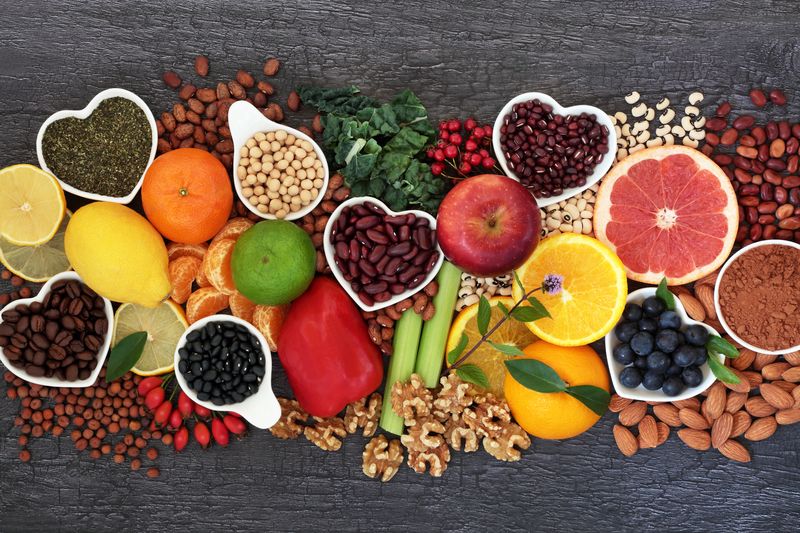
- Oats and barley (rich in beta-glucan fibre)
- Legumes such as chickpeas, lentils and beans
- Nuts and seeds
- Fruit and vegetables
- Extra virgin olive oil
- Seafood 2–3 times per week
At the same time, aim to reduce foods high in saturated fat such as:
- Fatty cuts of meat
- Processed meats
- Butter
- Cream
- Coconut oil
Many people are surprised to learn that coconut oil contains even more saturated fat than butter.
Easy Ways to Add Psyllium Husk
Breakfast Yoghurt Bowl
Mix:
- 200g low-fat Greek yoghurt
- 1 teaspoon psyllium husk
- ½ cup berries
- 15g walnuts
- Cinnamon
Cholesterol-Friendly Smoothie
Blend:
- 250ml reduced-fat milk
- ½ cup rolled oats
- 1 small banana
- 1 teaspoon psyllium husk
- 15g almonds
- Cinnamon
Overnight Oats
Combine:
- ½ cup rolled oats
- 200ml milk
- 1 teaspoon psyllium husk
- ½ cup berries
- 1 tablespoon chia seeds
Leave overnight and enjoy the next morning.
Important Considerations
Because psyllium absorbs water, it should always be taken with plenty of fluid.
Aim for:
- At least one large glass of water with each dose
Psyllium can also affect the absorption of some medications. As a general guide, take medications at least 1–2 hours before or after psyllium, but always discuss this with your pharmacist or healthcare professional.
Take Home Message
Psyllium husk is one of the most evidence-based nutrition strategies available for improving cholesterol levels. Research consistently shows that regular intake can help lower LDL cholesterol and total cholesterol, particularly when consumed at doses of approximately 5–10 grams per day alongside a healthy eating pattern.
While psyllium is not a replacement for prescribed cholesterol-lowering medication when it is needed, it can be a valuable addition to your heart health toolkit.
Need Help Improving Your Cholesterol?
At Feed Your Future Dietetics, we help individuals develop practical, evidence-based nutrition strategies to improve cholesterol, heart health, and overall wellbeing.
With over 10 years of experience supporting Australians to achieve their health goals, we focus on realistic nutrition advice that fits your lifestyle.
To book an appointment or learn more, contact:
ashleigh@feedyourfuturedietetics.com
References
Psyllium supplementation and lipid profiles: systematic review and dose-response meta-analysis of randomized controlled trials. 2025. PubMed Central.
Wei ZH, Wang H, Chen XY, Wang BS, Rong ZX, Wang BS, Su BH, Chen HZ. Time- and dose-dependent effect of psyllium on serum lipids in mild-to-moderate hypercholesterolemia: a meta-analysis of controlled clinical trials. Eur J Clin Nutr. 2009;63(7):821-827.
Olson BH, Anderson SM, Becker MP, et al. Psyllium-enriched cereals lower blood total cholesterol and LDL cholesterol, but not HDL cholesterol, in hypercholesterolemic adults: results of a meta-analysis. J Nutr. 1997;127(10):1973-1980.